Review: Tedeschi Trucks Band Brings a Family Affair to Clearwater’s BayCare Sound
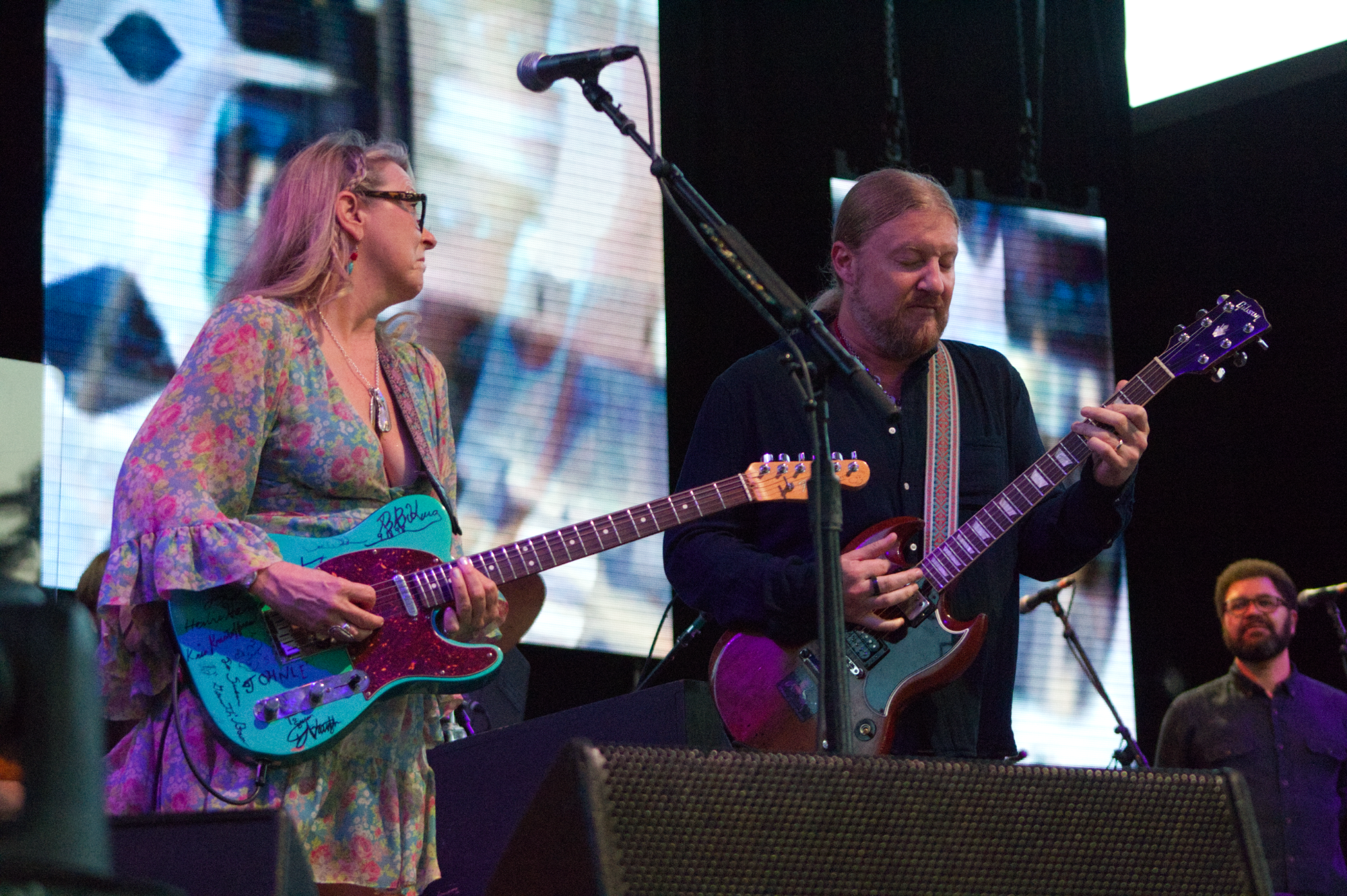
Photo by Josh Bradley
Susan Tedeschi led the parade on stage, followed by Derek Trucks. Then came the band, more band, and a few more members of the band.
By the time all 11 musicians had taken their places at Clearwater's BayCare Sound on Tuesday night, there were enough people onstage to start a small orchestra. Two drummers, a horn section, keyboards, guitars, and a rotating cast of vocalists. It was a traveling circus.
But somehow, it never sounded like too much.
For all the firepower assembled behind Derek and Susan, the most impressive thing about the sprawling ensemble wasn't how much each musician could play. It was how well they knew when not to.
Each contribution seemed to arrive exactly when it was needed. And when somebody decided to let loose, the others knew how to get out of the way.
That kind of communication is impressive enough in a jazz trio. Tedeschi Trucks Band manages it with 11 people, navigating two full sets of blues, soul, funk, gospel, and rock and roll with a familial understanding of one another.
The first set demonstrated just how far those musicians could stretch without losing each other. “I Am the Moon” grew from a somber, organ-soaked opening into a swelling arrangement of brass and voices before Trucks' guitar pushed the whole thing into a frenzy. “I Want More” followed with a celebratory funk groove, its guitars harmonizing side by side before Trucks took flight.
But the spotlight rarely stayed in one place for long.
Tedeschi traded her usual Telecaster for a Gibson during “Devil Be Gone,” digging into a blues solo with bends akin to B.B. King. Still, her soulful voice managed to bring it back home, softening the band's rougher edges before the horns and backing singers came rushing back in.
The band's other vocalists remained far from background duty. Keyboardist Gabe Dixon took the lead on the Allman Brothers' “Come and Go Blues,” while vocalist Mike Mattison brought a grittier edge to the blues numbers. Songs passed between voices as naturally as solos passed between instruments.
That generosity extended to the horn section. A cover of Derek and the Dominos’ “Keep On Growing” traveled from Trucks' Eastern-inflected guitar lines into a rolling rhythm before the trombone stepped forward. The saxophonist periodically abandoned conventional melody for explosive, free-jazz improvisation, only to return later with soft flute intros that seemed to float above the band.
Then came “Idle Wind.”
The first-set closer unfolded into a sprawling instrumental journey, eventually leaving the two drummers to build something of their own. They traded rhythms, pulled back to barely audible taps, and gradually piled one idea atop another until the percussion thundered across the amphitheater.
The audience applauded, convinced the solo had ended.
The drummers weren't finished, and it seemed as though they made that decision in that very moment.
They continued, communicating through sound and energy alone. Eventually, a single piercing note from Trucks' guitar signaled the return of the ensemble, and the other musicians slipped back into place as though the entire excursion had been established beforehand.
But it didn't sound rehearsed. It sounded understood.
That musical relationship owes an obvious debt to the Allman Brothers Band, whose combination of blues, jazz, rock, and extended improvisation helped establish the Southern rock tradition. Trucks spent years playing alongside the musicians who built that sound, including his uncle, drummer Butch Trucks. With Tedeschi Trucks Band, the tradition has grown into something broader, enriched by gospel harmonies, deep soul, and a brass section capable of turning an angelic swell into a full-blown celebration.
The second set made that sense of community even more apparent.
Sly & the Family Stone's “You Can Make It If You Try” and “Everyday People” brought the band's communal spirit into focus. Around the venue, generations of fans shared the experience. Silver-haired concertgoers filled the seats near the stage, while a more typical festival crowd spread across the lawn. Different generations, different musical entry points, all gathered around the same sprawling sound.
During “Soul Sweet Song,” images of the Allman Brothers' extended family appeared behind the musicians. Gregg Allman at the organ. Dickey Betts with his guitar. Jaimoe and Butch Trucks behind their drums. Kofi Burbridge playing flute.
For anyone who was introduced to Tedeschi Trucks through the Allmans, it was difficult not to feel the weight of that history. But the moment didn't feel like a band simply looking backward.
The music was still moving forward, carrying those influences into another generation of musicians who weren't afraid to get dirty along the way.
“I Walk on Gilded Splinters” sank into swampy, fuzz-drenched blues, with Tedeschi returning to her Gibson for another fierce solo. In contrast, “Midnight in Harlem” arrived with a slow, tantalizing introduction that seemed to hold the audience in anticipation before revealing one of the band's most beloved songs.
Trucks eventually exchanged his familiar SG for a Flying V during the title track of the band’s latest album, “Future Soul,” unleashing a harder, almost Eddie Van Halen-like attack.
The band followed with a soulful rendition of James Taylor's “Fire and Rain,” trading the arena rock sound for one of the evening's more intimate moments. But the tenderness didn't last long. “Made Up Mind” came roaring in behind it, sending the second set toward an explosive finish.
By the time the band returned for an encore of Derek and the Dominos' “Got to Get Better in a Little While,” the crowd was on its feet. The amphitheater began to feel like a neighborhood block party, with everyone invited.
Eleven musicians had spent the evening passing songs, trading solos, and sprinkling notes throughout, each knowing when to step forward and when to make room.
There was Tedeschi, there was Trucks, and there was one hell of a band bringing it all together.
