Before Clearwater concert, Warren Haynes talks Ziggy Marley, musical lineage, and the next generation
Ahead of an October show with Marley, Gov’t Mule’s bandleader reflects on the music that shaped him and what gets carried forward.
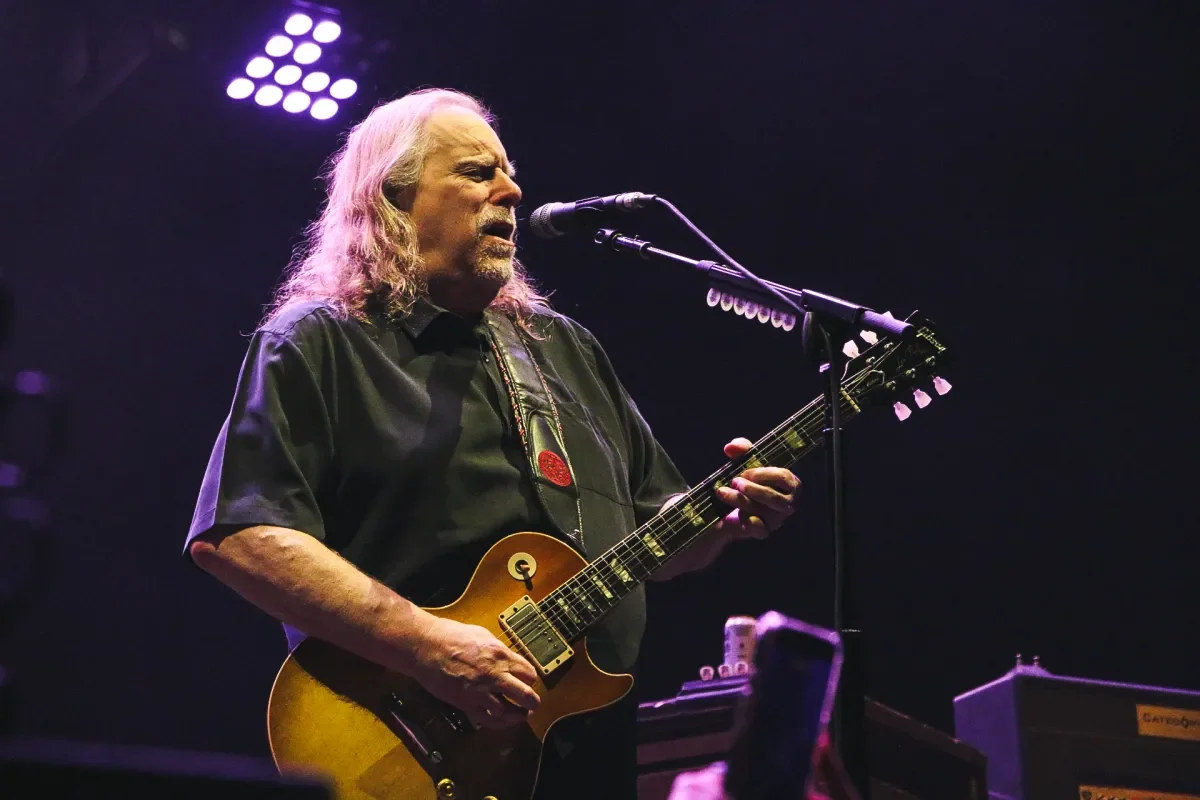
Photo c/o Gasparilla Music Festival
From joining the Allman Brothers Band alongside Dickey Betts and Gregg Allman to performing with The Dead, Warren Haynes has spent decades carrying musical traditions forward while continuing to build his own.
That history is at the center of Dreams & Songs: A Symphonic Journey, Haynes’ upcoming live album recorded with the Asheville Symphony Orchestra. The project reaches across his extensive catalog, reimagining songs from Gov’t Mule, the Allman Brothers Band and his solo work alongside songs by the Grateful Dead.
But the 66-year-old guitarist wasn’t interested in combining rock n’ roll with symphony just for the novelty of it, he explained in a recent conversation.
“I think the majority of rock songs or whatever don’t really cry out to be merged with a symphony,” Haynes said. “And that carries over to my songs as well. I think most of them, I don’t feel the need to hear that experiment.”
Instead, the challenge became finding the songs where an orchestra could add something to what was already there. He pointed to “Raven Black Night,” “Thorazine Shuffle,” “Banks of the Deep End” and “Dreams & Songs” as examples where it worked.
“The symphony, it enhances what was already there,” Haynes said. “I didn’t want anything to feel like that it didn’t belong.”
The project began taking shape after the Asheville Symphony approached Haynes about collaborating. His wife, Stefani Scamardo, suggested turning it into a retrospective, moving through more than three decades of his career and choosing the songs that made sense for an orchestra.
Recorded before the pandemic and held back as Haynes turned his attention toward newer material, Dreams & Songs is finally arriving years later as what he calls a “once in a career release”.
But the songs on the album aren’t the only thing from his musical past being revisited.
This fall, Gov’t Mule will join Ziggy Marley for the “Dreaming the Same Dream” tour, including an Oct. 4 stop at Clearwater’s BayCare Sound. The tour takes its name from a song Haynes and Marley wrote together roughly 15 years ago.
“We’ve known each other a long time,” Haynes said. “At one point I was hanging out in L.A., and Ziggy and his family have a house there, and somebody had brought up the idea of the two of us doing some writing together.”
The pair wound up writing two songs. “Dreaming the Same Dream” eventually appeared on the Warren Haynes Band’s Live at the Moody Theater. The other, Haynes said, has yet to be recorded.
Despite coming from different musical traditions, the Gov’t Mule bandleader sees common ground in both their approach to songwriting and their belief in what music can accomplish.
“I think the common ground between the two of us is the importance of music, and even in the sense that it can be part of the healing process, and unity, and bringing people together,” Haynes said.
“Some people take music to be one of the most important things in their life, and some people only enjoy it in the background, but everyone loves music, and everyone can be touched by music,” he continued. “It’s one of those rare things that can bring people together in a positive way and there’s no negative downside.”
Musically, Marley and Mule may not be as far apart as genre labels suggest either.
While Gov’t Mule is most often associated with blues, rock, and improvisational music, reggae has long been part of the band’s vocabulary as well, particularly on projects like Mighty High and Dub Side of the Mule. Haynes traces his own connection with the genre back to his teenage years.
“I know some rock fans aren’t reggae fans,” he said. “But I don’t really understand that because reggae music is so positive and addictive.”
The jam-scene veteran also sees a kinship between the seemingly different worlds of reggae and blues.
“I think it’s kind of like blues in its own way,” he said. “It’s centered around traditional themes and then there are certain artists that take it further and create their own kind of styles of reggae music.”
In explaining that connection, Haynes placed Bob Marley alongside some of the foundational figures of American blues.
“I look at people like Bob Marley as being equivalent to people like Son House and Elmore James and Muddy Waters and Howlin’ Wolf,” Haynes said. “When you add to that a lot of the great songs that have come out of the reggae school, they’re just timeless. And songs that are going to live forever.”
After decades spent learning from and playing alongside his own musical heroes, the longtime Allman Brothers guitarist now finds himself on the other side of that relationship.
Marcus King has openly described him as a mentor, while Haynes has also championed other young musicians like Billy Strings and Daniel Donato.
When asked about that changing role, Haynes immediately went back to his relationship with the Allman Brothers Band.
“There are many people that I consider mentors that helped me get where I wound up,” he said. “And the one that comes to mind the most is Dickey Betts, who gave me the biggest career opportunity of my life.”
Haynes acknowledges a feeling of obligation to pass some of that guidance along.
“I think there’s an underlying unspoken responsibility with any generation of music that comes before the current one,” he said. “You guide younger musicians and give them examples to follow and advice if they’re seeking it.”
He’s careful not to present that advice as gospel. His opinion, Haynes said, isn’t necessarily the right one, just an informed one.
“I know how much it meant to me early on in my career and any help I can be, I will gladly try,” he said.
There was a stretch, however, when the guitar legend wasn’t too optimistic about the generation coming up behind him.
“I think there was at least a decade, maybe more, where it appeared that people were only concerned with being famous and cutting whatever corners were necessary to get to that place,” Haynes said.
For a while, the emphasis on internet success left him “pretty depressed”, but what he sees now is different.
“There’s this kind of groundswell of young musicians who are more interested in making really great music that stands the test of time and maintains integrity,” he said.
It’s a shift the songwriter finds encouraging because it mirrors the way he remembers approaching music himself.
“When I was growing up, that’s the way we all looked at music,” he said. “We looked at it as some opportunity to do something special and to be part of something that wasn’t about being rich and famous. It was more than that.”
That seriousness, Haynes said, can often be heard before he ever gets to know a musician. Part of it comes from the artists they choose to study, and whether they’re exploring the past or consuming what he calls the “musical wallpaper” filling the airwaves.
For younger musicians trying to find their own sound, his advice is to keep digging.
“Don’t limit your influences to one or two or three genres,” Haynes said. “Don’t limit your influences to the previous decade or the previous two decades. You gotta go back further and further and see who moved the people before that, and see who influenced who and why.”
It’s an approach Haynes has followed throughout his own career. The blues can lead to the Allman Brothers, Grateful Dead songs can find new dimensions alongside an orchestra, and Bob Marley can occupy the same conversation as Muddy Waters and Howlin’ Wolf. The musicians who came before can provide a foundation without dictating what comes next.
“It’s all a big family tree,” Haynes said. “And the more you discover, the more it’s possible for you to find your own voice.”
By J.C. Roddy
